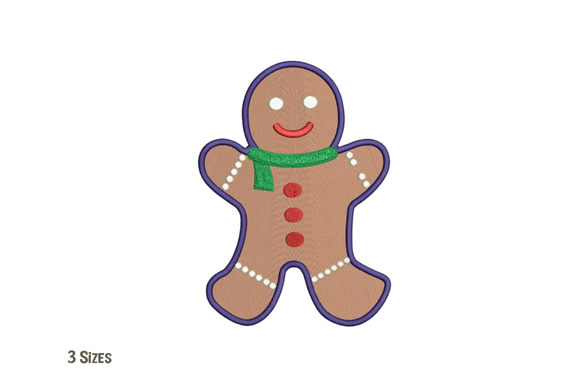
Gingerbread Candy Boy Applique Embroidery
A Playful, Festive Anchor for Small Business Branding
As an embroidery designer who’s developed and tested hundreds of machine embroidery designs for small business merch, my first impression of the Gingerbread Candy Boy Applique Embroidery is immediate: it’s warm, approachable, and unmistakably seasonal—yet not so literal that it limits year-round appeal. The name evokes handmade charm and nostalgic joy, while “Applique” signals smart construction—not just dense fill stitching, but layered fabric-friendly execution. For cafés adding holiday flair to aprons, boutiques branding limited-edition tote bags, or bakeries embroidering staff caps, this design reads as friendly professionalism—not kitsch.
Where Gingerbread Candy Boy Applique Embroidery Shines in Real Business Use
This machine embroidery design thrives where personality meets practicality. As an embroidered patch, it holds crisp detail at 3–4 inches—ideal for sew-on branding on denim jackets, reusable totes, or gift packaging accents. On staff uniforms, it works beautifully as a chest logo accent (not too large, not too small) or as a sleeve detail that invites conversation without overwhelming workwear. I’ve seen it elevate apron embroidery for local florists and pet brands—adding whimsy without sacrificing polish.
For custom apparel like crewneck sweaters or t-shirts, the applique structure reduces stitch density versus full-coverage fills, meaning faster production, less thread breakage, and better drape. That’s critical when you’re running commercial embroidery for multiple small businesses during peak season. And because it’s designed for versatility—“Perfect on tote bags, t-shirts, cushions, sweaters, and so much more”—it scales well across product categories, supporting cohesive brand identity without needing redesigns for each item.
Etsy sellers and handmade brands benefit especially: the design’s inherent warmth supports storytelling. Pair it with natural fabrics—linen totes, organic cotton tees—and it reinforces authenticity. It also translates cleanly into printable mockups for client approvals, helping crafters and merch creators present polished proposals before committing to physical samples.
Use With Intention: Where Caution Applies
Like any effective digital embroidery file, the Gingerbread Candy Boy Applique Embroidery demands thoughtful placement. Avoid shrinking it below 2.5 inches for patches—it loses legibility in candy cane stripes and facial features. Cap fronts are possible, but only on structured, flat-front panels; curved crowns or low-profile caps risk distortion unless digitized with underlay compensation (verify if your version includes that).
High stitch density isn’t its primary trait—but check the file’s actual fill areas. If dense candy swirls or tight icing outlines appear, test carefully on textured fabric (like heavy canvas totes or looped terry towels), where stitches can sink or pucker. Dark uniforms? Confirm thread color contrast: reds and whites pop best on navy or charcoal, but avoid light gold thread on black—it fades visually after washing. Speaking of washing: since many small businesses use embroidered items for customer gifts or event merch, always test durability on real fabric with proper stabilizer. A tear-away + cut-away combo often wins for long-term wear.
How This Design Strengthens Your Brand Identity
The Gingerbread Candy Boy Applique Embroidery doesn’t just decorate—it communicates. Its hand-drawn charm builds instant recognition for local businesses wanting to stand out from generic stock logos. Customers subconsciously associate that playful yet precise aesthetic with care, creativity, and human-scale production—key trust signals for handmade product buyers. When used consistently across aprons, caps, and tote bag designs, it creates visual rhythm that strengthens recall. That consistency matters most for seasonal campaigns: imagine a bakery using it across holiday packaging, staff gear, and customer thank-you gifts—the repetition deepens emotional resonance without feeling repetitive.
It also raises perceived product value. An embroidered patch feels more intentional—and more premium—than printed labels. That perception directly impacts buyer engagement, especially on Etsy or boutique shelves where tactile differentiation drives decisions.
Practical Embroidery Designer Notes Before You Stitch
- Test in black and white first. Assess balance and clarity without color distraction—especially important for client mockups.
- Verify small-patch viability. Resize to your intended patch dimensions (e.g., 2.75" wide) and check outline integrity and spacing between candy elements.
- Review thread color contrast. Print a thread chart alongside your fabric swatches—don’t assume red = vibrant on heather grey.
- Inspect spacing and underlay. Tight curves (like the boy’s hat brim or candy cane swirls) need clean underlay to prevent gapping on stretchy or soft fabrics.
- Confirm hoop size compatibility. Most standard versions fit 4x4 or 5x7 hoops—but double-check before batching orders.
- Test on real fabric with correct stabilizer. A lightweight knit tee needs different support than a canvas tote. Don’t skip this step.
- Create a printable mockup for client approval. Show scale, placement, and thread palette—avoid assumptions.
- Compare beside other design assets. Does it harmonize with your existing logo, typography, or brand colors—or clash?
- Confirm commercial licensing. Since this is for small business merch, ensure your purchase grants rights for resale, distribution, and branded product use.
Remember: “Add a dash of Christmas magic to any product” is more than marketing—it’s a reminder that this embroidery file is meant to enhance, not dominate. Used intentionally, the Gingerbread Candy Boy Applique Embroidery becomes part of your brand’s visual language—not just seasonal decoration, but a signature touch that customers remember, reach for, and recommend.