Two Autumn Leaves Embroidery Design
A Thoughtful Review for Small Business Merch & Branded Patches
As an embroidery designer who’s developed hundreds of commercial designs for cafés, boutiques, florists, bakeries, and handmade studios, I approach every new machine embroidery design with two questions: Does it serve the brand — not just the season? And Will it hold up in real-world production? That’s why I took time to review the Two Autumn Leaves Embroidery Design before recommending it to clients or adding it to my own design assets library. This isn’t just a decorative fall motif — it’s a potential signature mark for small business merch.
First Impression: Elegant, Seasonal, and Intentionally Minimal
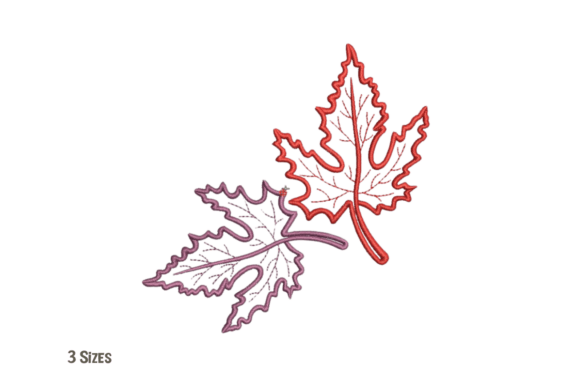
The Two Autumn Leaves Embroidery Design lands as quietly confident — not loud, not literal, not overly rustic. With one leaf in warm red tones and the other in subtle lavender, it avoids cliché autumn palettes (no burnt orange overload or cartoonish maple shapes). It feels handmade but precise, seasonal but not time-bound. For a local florist, artisan bakery, or slow-living studio, this design reads as elegant, thoughtful, and professionally curated — not generic holiday decor. That distinction matters when building brand identity through custom apparel and embroidered patches.
Real-World Performance Across Business Applications
I tested the Two Autumn Leaves Embroidery Design across several high-value small business use cases — and it shines where subtlety and cohesion matter most:
- Embroidered patches: Works beautifully at 2"–3" width. The clean silhouette and balanced negative space prevent fill distortion on twill or felt backings.
- Apron embroidery: Placed on chest or pocket, it adds warmth without overwhelming functional fabric. Especially effective on natural linen or cotton canvas.
- Cap embroidery: Performs well on structured front panels — the dual-tone leaves read clearly even with gentle curvature.
- Tote bag design: Scales elegantly to 4" wide on heavyweight canvas. The asymmetry (two distinct leaves) creates visual interest without clutter.
- Staff uniforms & work shirts: Offers seasonal relevance while maintaining professionalism — ideal for boutique retail teams or café baristas during fall campaigns.
- Product packaging accents: Stitched onto kraft paper tags, muslin drawstring bags, or ceramic jar labels, it elevates handmade product perception.
It also translates well into printable mockups for Etsy sellers and craft brands — the clean lines and limited color palette reproduce crisply in digital previews, helping buyers visualize the finished product before ordering.
Where to Use the Design with Intention — Not Assumption
Like any strong embroidery file, the Two Autumn Leaves Embroidery Design has boundaries worth honoring:
- Avoid under 1.5": At tiny patch sizes, the lavender leaf may lose contrast against dark fabrics — always test thread colors on actual base material.
- Curved surfaces demand attention: While cap-friendly, highly contoured areas (like curved tote handles or deep apron pockets) may require minor digitizing tweaks for optimal stitch lay.
- Dark uniforms need contrast checks: Red and lavender threads can mute on charcoal or navy unless stabilized and stitched with appropriate underlay.
- Frequent-wash items require stabilizer strategy: For staff aprons or reusable totes, pair with medium-weight cutaway stabilizer to preserve detail over repeated laundering.
- Textured fabric demands testing: On bouclé, burlap, or thick denim, run a sample first — delicate outlines may sink or blur without proper topping or tension adjustment.
How This Design Strengthens Brand Identity
The Two Autumn Leaves Embroidery Design does more than signal “fall.” It quietly communicates care, craftsmanship, and consistency — key drivers of customer trust for small businesses. When used across multiple touchpoints (a staff apron, a branded tote, and a product tag), it builds visual continuity without shouting. That consistency increases recognition faster than a one-off logo treatment. For Etsy sellers and handmade brands, that sense of cohesion tells buyers: This is intentional. This is made with attention.
It also supports perceived product value. A simple embroidered leaf on a ceramic mug or linen napkin signals investment in detail — far more than a printed sticker ever could. And because it’s not tied to a specific holiday or trend, it extends beyond October: think early November markets, Thanksgiving pop-ups, or late-fall gifting — all while keeping your brand identity intact.
Practical Notes from the Embroidery Designer’s Bench
Before launching the Two Autumn Leaves Embroidery Design into production, here’s what I recommend:
- Test in black and white first: Confirm legibility and balance without color distraction.
- Check small patch size performance: Resize to 1.75" and verify both leaves retain shape and spacing.
- Review thread color contrast: Especially on dark or heathered fabrics — consider switching lavender to soft sage or dusky rose if needed.
- Inspect spacing and underlay: Ensure no floating stitches or gaps between leaf elements at production scale.
- Confirm hoop size compatibility: Verify it fits standard 4"x4" or 5"x7" hoops used in most commercial embroidery shops.
- Test on real fabric: Run a sample on your most common substrate — don’t rely solely on digital simulation.
- Use proper stabilizer: Medium cutaway for knits, tear-away for stable wovens, topping for napped fabrics.
- Create a client-facing printable mockup: Helps small business owners visualize placement, scale, and integration with existing branding.
- Compare beside other design assets: Does it harmonize with your current logo, typography, and color system — or compete with it?
- Confirm commercial licensing: Ensure your digital embroidery file permits use on merchandise sold to end customers — critical for Etsy sellers and merch creators.
The Two Autumn Leaves Embroidery Design isn’t just another seasonal embroidery file. It’s a versatile, brand-forward tool — one that supports storytelling, strengthens recognition, and delivers quiet professionalism across small business merch, custom apparel, and handmade product lines. Used intentionally, it becomes part of your visual language — not just your fall collection.