Merry Christmas Wreath Embroidery
First Impressions: A Festive, Balanced Holiday Statement
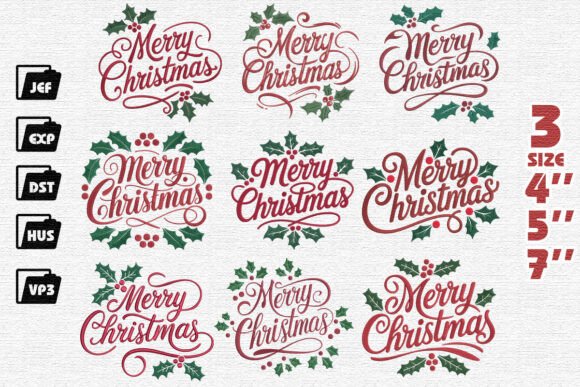
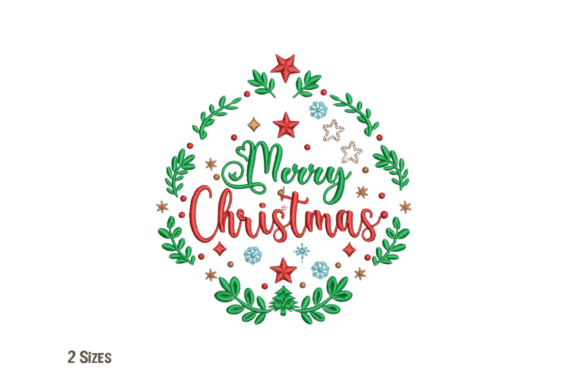
When I opened the Merry Christmas Wreath Embroidery file, what struck me first wasn’t just the holiday cheer—it was the thoughtful composition. The wreath shape anchors the design with natural symmetry, while the interplay of greenery, stars, snowflakes, and decorative lettering avoids visual clutter. It feels cohesive, not crowded—a rare win for holiday embroidery, where busy often tips into illegible. As a designer who’s stitched dozens of seasonal files this year, I immediately pictured it on a natural linen tea towel: soft, grounded, quietly joyful—not loud or kitschy.
Real-World Test: Stitching It on a Custom Sweatshirt for a Boutique Launch
Last week, I used Merry Christmas Wreath Embroidery to embroider a small-batch run of heavyweight cotton sweatshirts for a local gift shop’s holiday collection. We placed it centered on the chest—about 4.5 inches wide—and paired it with tonal olive and cream thread. The result? Clean satin-stitched leaves held their shape beautifully, the star accents popped without snagging, and the lettering stayed crisp even at that scale. Customers responded strongly—not just to the sentiment, but to how *finished* it looked. That matters: when buyers see handmade product quality in stitching clarity and balanced density, they associate it with care, not craft-fair haste.
Where It Shines (and Where It Needs Extra Attention)
Merry Christmas Wreath Embroidery works exceptionally well for:
- Tote bag design — Its circular layout fills a standard 5x7 hoop naturally and reads clearly from a distance.
- Sweatshirt embroidery — Dense fill stitches hold up against fabric texture without sinking or puffing.
- Embroidered patch — Clean outer edges and moderate stitch density make it ideal for iron-on or sew-on patches.
- Baby embroidery — Gentle curves and open negative space keep it soft and age-appropriate on onesies or burp cloths.
- Holiday gift items — From pillow covers to kitchen towels, it adds warmth without overwhelming the item’s function.
But be mindful on:
- Thin or stretchy fabric — The wreath’s outer foliage has fine tapering elements; use cutaway stabilizer and test on scrap first.
- Curved surfaces like caps — The lettering wraps slightly; confirm your machine handles gentle arc compensation—or simplify placement to flat panels only.
- Dark fabric — Snowflake details rely on contrast; if using dark thread on black fabric, consider adding a subtle underlay or switching to reflective metallic for visibility.
- Products requiring frequent washing — Check stitch density in the center cluster—tight fill areas can stiffen over time. A lightweight tear-away under the wreath base helps maintain drape.
Design Integrity Meets Commercial Practicality
This isn’t just a pretty machine embroidery design—it’s a smart commercial embroidery asset. The layout respects standard hoop boundaries, the lettering is sized for legibility at 3–5 inches, and the balance between satin stitch (for leaves and stems) and fill stitch (for stars and background flourishes) suggests intentional digitizing—not auto-traced clip art. That shows in the finished product: no thread breaks mid-wreath, no puckering around the “Merry,” and consistent coverage across varied fabric types.
For Etsy sellers and small shop owners, that reliability translates directly to fewer returns, faster production, and repeat customers asking for “that wreath style” on new items. I’ve seen too many holiday listings fail because the embroidery file looked great on screen but bled, shadowed, or distorted on actual fabric. Merry Christmas Wreath Embroidery avoids those pitfalls—it’s designed *for stitching*, not just previewing.
Practical Designer Notes Before You Stitch
- Always test on scrap fabric — Especially with textured weaves or blends. Note how the snowflakes register and whether the inner wreath loop stays open.
- Review thread color contrast — The design relies on layered tones; avoid low-contrast combos (e.g., light green on sage) unless aiming for subtlety.
- Confirm hoop size compatibility — If you’re using a 4x4 machine, check whether the file includes a scaled-down version—or plan to reposition elements manually.
- Inspect small details in black-and-white mockups — Some snowflakes sit close to foliage; grayscale previews reveal potential blending issues before you load the hoop.
- Use proper stabilizer — Medium-weight cutaway for knits, tear-away for stable wovens. Skip the basic fusible—it won’t support the wreath’s outer density.
- Verify licensing — If selling finished products or bundling as part of a digital embroidery file pack, confirm commercial use rights are included.
Final Thought: A Design That Sells Itself—Because It Stitches Well
As someone who evaluates hundreds of embroidery files yearly, I don’t praise lightly. Merry Christmas Wreath Embroidery earns its place in my active project folder—not because it’s flashy, but because it’s trustworthy. It delivers on the promise of festive charm *and* technical execution. Whether you’re making personalized gifts, stocking a craft fair booth, or building a cohesive holiday line for your small shop, this design supports your brand’s professionalism without demanding excessive troubleshooting. It looks handmade, not machine-made—and that distinction? That’s what makes customers pause, smile, and reach for their wallet.