Hand-stitched Embroidery Art of Blue Bir
A Designer’s First Look: Calm, Clear, and Quietly Confident
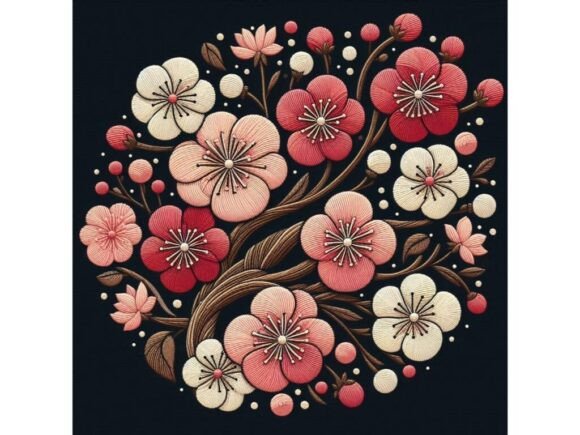
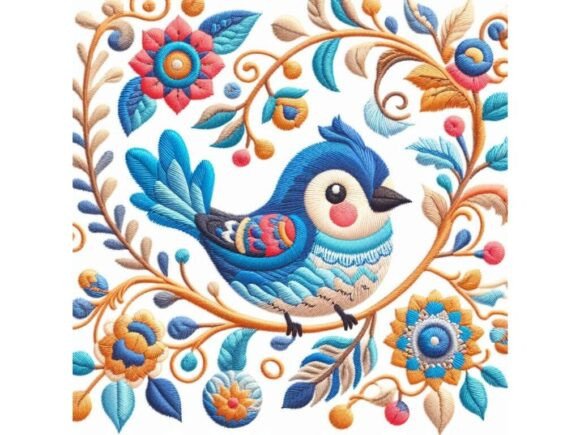
When Hand-stitched Embroidery Art of Blue Bir landed in my inbox—four crisp 4000×4000 JPEGs against vibrant, cohesive backgrounds—I paused. Not because it’s flashy, but because it’s settled. The bir is rendered with soft contour lines and gentle color layering—not photorealistic, not cartoonish, but something in between: a hand-drawn sensibility translated into clean digital illustration. It breathes space. That matters. I immediately pictured it stitched onto a linen tea towel for a local boutique’s spring launch—no fuss, no clutter, just quiet recognition.
Where This Design Finds Its Real-Life Rhythm
Last week, I prepped a custom embroidered tote bag for a client launching a small-batch herbal tea line. I tested three designs side-by-side on natural canvas: one overly dense, one too minimal, and Hand-stitched Embroidery Art of Blue Bir. It won—not by standing out loudest, but by holding its ground gracefully. The shape sits comfortably within a 4”–5” hoop, the curves translate well to satin stitch without distortion, and the negative space around the bir keeps fill stitch density manageable on medium-weight fabric. It’s equally at home on a baby onesie (scaled down to 3”) or a sweatshirt chest placement (at 4.5”), where its soft edges soften the garment’s structure instead of fighting it.
I also used it as a focal point for a set of holiday kitchen towels—stitched in tonal blues and sage thread on oat-colored linen. Customers commented not just on the image, but on how “handmade” it felt—even though it was machine-embroidered. That’s the strength of this design: it carries the warmth of hand-stitching without demanding impossible precision from the embroiderer.
Where to Proceed Thoughtfully
Hand-stitched Embroidery Art of Blue Bir isn’t built for every surface. On stretchy fabrics like lightweight knits or curved caps, the outer contours can blur if stabilizer isn’t layered precisely—especially where the bir’s lower branches taper. I’d skip it for ultra-fine silks or loosely woven gauze; the detail holds best on stable weaves like cotton twill, denim, or medium-weight linen.
It’s also not ideal for tiny hoops under 3”. The subtle texture in the bir’s leaves and trunk relies on fine stitch definition—details that vanish when aggressively downscaled. And while the JPEGs include colorful backgrounds (great for sublimation or print-on-demand mockups), those backdrops don’t translate to embroidery files. If you’re planning an applique design or layered patch, remember: this is an illustration, not a ready-to-stitch embroidery file. You’ll need digitizing—or confirmation from the seller that vector or DST files are included.
What This Means for Your Craft Business
- Customer trust rises when your finished product looks intentional, not generic—Hand-stitched Embroidery Art of Blue Bir delivers that handmade polish without requiring advanced technique.
- Etsy sellers will find it works beautifully in listings: pair one JPEG with a natural-light mockup of a pillow cover or apron, and buyers instantly grasp its versatility and mood.
- Small shop branding benefits from its quiet cohesion—it doesn’t shout, so it pairs well with minimalist logos, handwritten tags, or earth-toned packaging.
- Giftability is high: it reads as thoughtful, not trendy. A nursery wall hanging? Yes. A wedding guest towel? Absolutely. A personalized gift for a botanist friend? Perfect.
Practical Notes Every Embroidery Designer Should Check
Before stitching Hand-stitched Embroidery Art of Blue Bir into your next project, do these five things:
- Test it on scrap fabric matching your final product—especially if using textured or dark fabric. Thread color contrast shifts dramatically under real light.
- Review stitch density in your digitized version—if you’re converting it yourself, avoid overfilling the bir’s interior; let the outline and subtle shading carry the weight.
- Confirm hoop size compatibility. At full scale, it fits standard 5×7 hoops—but verify spacing if combining with text or secondary motifs.
- Inspect small details in black-and-white mockups. Does the bir still read clearly without color cues? It should—and it does.
- Double-check licensing. Since this is listed as Graphics and delivered as JPEGs, confirm whether commercial use (e.g., selling embroidered totes on Etsy) is permitted, and whether resale of digitized versions is allowed.
Final Thought: A Design That Serves the Maker, Not Just the Market
As someone who reviews hundreds of embroidery assets yearly, I appreciate when a design respects the craft—not just the click. Hand-stitched Embroidery Art of Blue Bir doesn’t try to be everything. It’s focused. It’s adaptable. It invites care rather than rushing. Whether you’re stitching a single baby cap for a friend or producing 50 embroidered aprons for your craft fair booth, it gives you room to work cleanly and present confidently. It’s not a shortcut—it’s a thoughtful starting point. And in a market flooded with loud, over-digitized graphics, that kind of clarity is rare. Keep it in your working folder. Pull it out for projects where authenticity matters more than attention-grabbing. You’ll be glad you did.