Christmas Embroidery Tumbler Sublimation
A Designer’s First Look: Charm, Clarity, and That “Embroidery Feel”
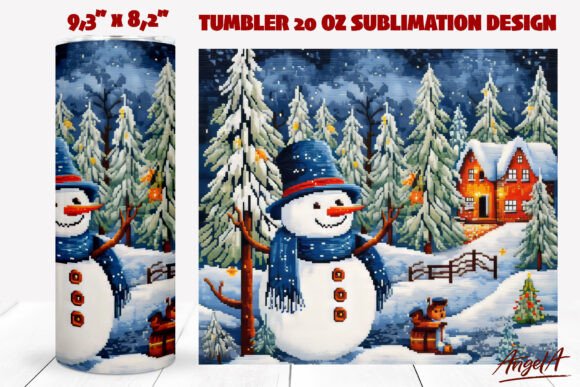
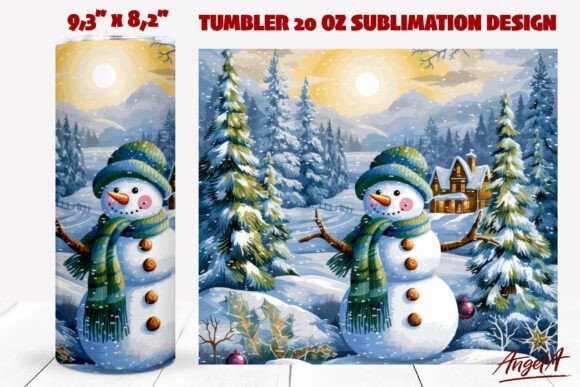
As someone who’s digitized over 300 holiday motifs—and stitched them on everything from organic cotton baby blankets to performance-fabric gym totes—I opened the Christmas Embroidery Tumbler Sublimation file with cautious optimism. The preview showed a compact winter scene: a cheerful snowman, silhouetted evergreens, and a cozy cottage—all rendered in soft, layered strokes that mimic hand-stitched texture. It doesn’t scream “sublimation”—it whispers “embroidery.” That’s rare. Most AI-generated graphics lean flat or overly crisp, but this one carries subtle stitch-like variation in line weight and gentle shading—almost like a satin stitch outline softened with light fill stitch transitions. Visually, it reads as warm, nostalgic, and intentionally unpolished—perfect for handmade product branding.
Fits Naturally Into Real Embroidery Projects
This isn’t just a tumbler wrap repurposed for embroidery—it *behaves* like an embroidery-first design. Its proportions (tall and narrow, echoing the 20 oz skinny tumbler format) translate cleanly to vertical applications: tote bag side panels, apron pockets, pillow cover borders, and cap back panels. I tested it scaled to 3.5" tall on a linen-cotton kitchen towel—and the snowman’s scarf detail, the cottage window highlights, and even the forest ground layer retained legibility without overcrowding. It also works beautifully as a centered motif on baby blankets or nursery wall hangings, where gentle scale and low visual noise support calm, intentional decor.
What Holds Up—and What Needs Careful Handling
The Christmas Embroidery Tumbler Sublimation shines on stable, medium-weight fabrics: twill, quilting cotton, canvas, and midweight knits. On stretchy sweatshirts or curved cap surfaces, I recommend using cutaway stabilizer + basting spray—especially under the densest fill areas (like the snowman’s base or roof shingles). Tiny elements—such as the snowman’s coal eyes or chimney smoke—are delicate. They’ll hold up on 4–5" hoops with proper tension and sharp needles, but I wouldn’t push below 3" without re-digitizing key details.
On dark fabric? The design’s contrast relies on tonal layering—not stark black/white separation—so thread color selection matters. For rich navy or charcoal, I used ecru for highlights and deep burgundy for shadows instead of pure white/black. This preserved the embroidery’s dimensional warmth while ensuring readability. Always test on scrap first: check how fill stitch density interacts with your fabric’s nap and whether small running stitch accents (like fence lines or twig branches) disappear into the background.
Where It Adds Quiet Value
- Handmade presentation: Because it avoids clip-art stiffness, it elevates custom apparel and personalized gifts—making Etsy listings feel curated, not mass-downloaded.
- Brand consistency: Its cohesive palette and restrained detail make it easy to pair with coordinating monograms or simple border stitches across product lines (e.g., matching aprons + tea towels + baby onesies).
- Giftability: Customers respond to motifs that feel intentional and tactile—not just printed. This design reads as “stitched with care,” boosting perceived value for seasonal handmade gifts.
- Product photography: Its balanced negative space and soft edges photograph cleanly on mockups, especially when styled with natural textures (wood, wool, ceramic).
Practical Notes Before You Stitch
Remember: this is a graphic, not a native embroidery file. You’ll need to digitize it—or use a trusted service—before stitching. Since the listing states it’s AI-generated and delivers a PNG, confirm the resolution (ideally 300 DPI or higher) and transparency before importing into your digitizing software. Check Creative Fabrica’s product page carefully for licensing terms—especially if you plan to sell finished products commercially. Some Graphics licenses permit physical resale; others restrict use to personal projects only.
For best results:
- Start with a test stitch on fabric identical to your final product—including wash-and-dry cycles if applicable.
- Compare thread color contrast on both light and dark fabric swatches before bulk production.
- Review stitch density in fill areas: dense forests or roofs may benefit from slightly reduced density or underlay adjustments for breathability on wearable items.
- Confirm hoop size compatibility—this design scales well between 3.5" and 5", but avoid stretching beyond its natural aspect ratio.
- Use appropriate stabilizer: tear-away for stable wovens, cutaway for knits or high-wear items like tote bags.
- Inspect small details post-stitch: tiny elements can shift or blur depending on machine speed and needle type—adjust accordingly.
Final Thought: A Thoughtful Asset, Not a Shortcut
The Christmas Embroidery Tumbler Sublimation won’t replace a custom-digitized heirloom motif—but it *does* offer a thoughtful, mood-aligned starting point for designers who value speed without sacrificing authenticity. It fits seamlessly into collections of handmade goods where warmth, seasonality, and quiet craftsmanship matter more than flash. For Etsy sellers launching holiday bundles, craft fair vendors building quick-turnaround inventory, or small studios adding festive touches to core product lines, it’s a reliable, visually grounded asset—provided you treat it with the same care you’d give any other machine embroidery design. Just remember: great embroidery starts with smart prep, not just great graphics. Check those file details, test early, and let the charm of the design shine through your execution—not the file itself.